Offshore platforms operate in some of the most demanding environments on Earth. When designing access points, including gates, hatches, and walkways, safety isn’t negotiable. It’s engineered into every component from the ground up.
Safety has never been more critical. Recent industry data reveals that high-potential incidents in the offshore wind sector increased by 34% in 2024, rising from 183 to 245 instances compared to the previous year. As the sector expands and platforms push into more challenging environments, the importance of robust access safety systems becomes increasingly critical. Every gate, every hatch, every access point represents a potential risk or an opportunity to engineer safety into the fabric of offshore operations.
The Critical Role of Access Hardware
Access hardware serves as the gateway between personnel and critical infrastructure. In offshore environments, where saltwater corrosion, extreme weather, and mechanical stress test every component, the specifications for gates and hatches must reflect the harsh realities of marine operations.
Engineers designing offshore platforms face a fundamental challenge: creating access solutions that balance operational efficiency with uncompromising safety standards. The hardware must perform reliably under cyclical loading, resist high corrosion, and maintain structural integrity throughout the platform’s operational lifespan.

Material Selection and Engineering Specifications
High-grade stainless steel remains the material of choice for offshore gate hardware, offering proven corrosion resistance in marine environments. However, material selection extends beyond the base metal. Surface treatments, pickled and passivated finishes, for example, provide additional protection against the accelerated degradation that saltwater environments impose.
The engineering specifications must address several performance parameters:
Mechanical integrity: Hardware components face constant stress from platform movement, vibration, and direct interaction. Spring torsion mechanisms in self-closing gates must maintain consistent performance despite environmental exposure.
Corrosion resistance: Marine-grade materials and protective coatings are tested for reliability in accelerated corrosion environments, ensuring decades of dependable service.
Operational reliability: Access points must function predictably, even after extended exposure to salt spray and temperature fluctuations. Rubber isolation plates and precision-engineered bearing surfaces reduce wear and maintain smooth operation.
Design Considerations for Personnel Safety
Offshore regulations and safety standards continue to evolve, making it essential that gates, hatches, and Access safety begins with understanding how personnel interact with gates and hatches during routine operations and emergency scenarios.
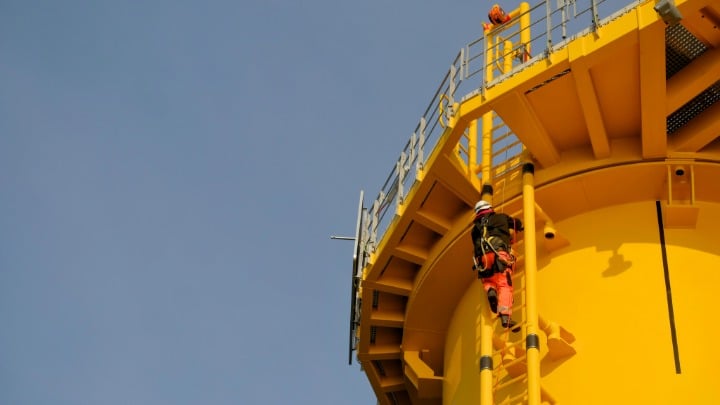
The physical demands on offshore workers are substantial. Personnel can need to climb up to 300 feet multiple times daily, fatigue becomes a critical safety factor. When grip strength diminishes and concentration wanes, even minor design flaws in access hardware can have serious consequences.
Hatch hardware must be engineered for intuitive operation requiring minimal effort to open and close while maintaining secure closure against environmental forces and preventing accidental falls through open access points.
Self-closing gates with controlled closure rates prevent unintended openings while allowing rapid entry and exit when needed. The positioning of access points matters as much as the hardware itself. Engineers must consider ergonomics, sight lines, and the natural flow of personnel movement across the platform. A gate that’s difficult to operate or poorly positioned compromises safety regardless of its technical specifications.
Regulatory Framework and Standards
Offshore access safety requirements are governed by a comprehensive framework of standards and regulations. While structural design often follows established codes such as ISO 19901 for offshore platforms, access hardware specifications draw from broader safety principles and industry best practices developed across decades of offshore operations. These requirements establish critical performance criteria for gates and hatches: load-bearing capacity, corrosion resistance ratings, operational reliability, and fail-safe mechanisms.
Compliance isn’t simply about meeting baseline requirements, it’s about exceeding them. Purpose-engineered solutions account for site-specific factors: wind loading, temperature extremes, and the frequency of personnel movement through access points.
Customisation for Project-Specific Requirements
Customisation might involve adapting mounting configurations, modifying closure mechanisms, or developing entirely new solutions for unique challenges. This collaborative approach ensures that access hardware integrates seamlessly with the broader platform design while maintaining safety.
Maintenance and Long-Term Performance
Even the most robust hardware requires a maintenance strategy. Offshore platforms present accessibility challenges that make frequent maintenance impractical. Access hardware must be engineered to minimise maintenance requirements while remaining serviceable when intervention is necessary.
Design features that support long-term reliability include serviceable components, corrosion-resistant fasteners, and modular construction that allows component replacement without complete system removal. Planning for maintenance during the design phase prevents costly operational disruptions later.
Looking Forward
As offshore wind development accelerates and platforms push into deeper waters and harsher conditions, access safety requirements will continue to evolve. Innovative engineering approaches, advanced materials, and adaptive designs will shape the next generation of offshore access hardware.
Whether you’re developing a new platform or upgrading existing infrastructure, Gatemaster Offshore will work with you to develop access solutions engineered to for long-term safety and performance in harsh environments.